Next-Gen eCommerce Solutions
Dive into the future of online retail with our cutting-edge eCommerce development services. Our team is dedicated to crafting custom solutions that drive sales, enhance user experience, and set your brand apart in the digital marketplace.






We've worked with hundreds of businesses Australia wide
Platforms
Websites
How we can help your eCommerce business
Our team expertly handles every dimension of your eCommerce site’s development, content management, updates, and maintenance. This comprehensive approach ensures your platform is not only technically sound but also continually evolving and content-rich, keeping you ahead in the competitive online marketplace.
eCommerce Development
Professional eCommerce Development for Every Need
Product updates & changes
Keeping your platform fresh with the latest updates and changes.
Security & monitoring
Securing your eCommerce transactions with specialised monitoring.
Fast response time
Speedy solutions from our eCommerce experts.

Expert eCommerce Strategies for Success
Partner with us to craft an eCommerce solution that resonates with your brand and audience. Our experts bring a wealth of knowledge and experience, providing customised strategies that drive traffic, engagement, and sales. Your success is our mission, guided by our expert eCommerce insights.
Maximize Your Online Potential with Us
- Tailored to fit your unique business needs and goals.
- Utilise the latest tools and technologies for a competitive edge.
- Make informed decisions based on analytics and market research.
- Designing intuitive and engaging shopping experiences for your customers.
- Ensuring your site stays up-to-date and performs at its best.
1
Formulate Strategy
Analyse competitors and create a unique strategy.
2
Develop Seamlessly
Focus on user experience and efficient development.
3
Support & Optimise
Provide ongoing enhancements and support.
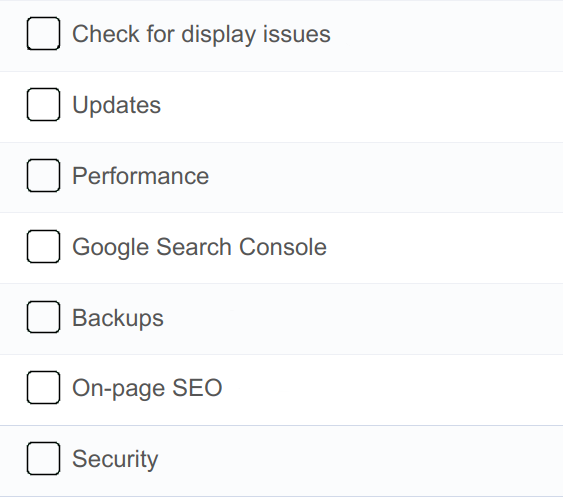
Precision eCommerce Performance Tuning
Fine-tune your ecommerce site with our expert analysis and recommendations. We look at everything from page loading times to checkout efficiency to ensure your customers have a seamless shopping experience.
Premium eCommerce development, premium results
Demand excellence for your website with our professional eCommerce solutions
Our eCommerce Management Packages
Investigate our eCommerce maintenance plans, created for varying needs and budgets. From basic upkeep to all-encompassing care, each provides a set of focused services to maintain and secure your site. If standard options don’t match your needs, we’re here to develop a customised plan for you.
Essential Care & Maintenance
From $99
Per month. Monthly updates.
- Plugin + platform updates
- Security monitoring
- Uptime monitoring
- SEO check
- UI/UX check
- Performance optimisation
Small Business Care & Maintenance
From $179
Per month. Fortnightly updates.
- Plugin + platform updates
- Security monitoring
- Uptime monitoring
- SEO check
- UI/UX check
- Performance optimisation
Business Care & Maintenance
From $299
Per month. Weekly updates.
- Plugin + platform updates
- Security monitoring
- Uptime monitoring
- SEO check
- UI/UX check
- Performance optimisation
Frequently asked questions
Want to know the benefits of choosing our eCommerce development solutions? Find your answers in the FAQs!
Types of Ecommerce Sites and Platforms
The main types include B2B (Business-to-Business), B2C (Business-to-Consumer), C2C (Consumer-to-Consumer), and C2B (Consumer-to-Business).
Popular platforms include Shopify, Magento, WooCommerce, BigCommerce, and custom solutions using platforms like Drupal or WordPress.
Consider your business size, budget, technical expertise, specific features, scalability, and long-term goals.
Yes, migration is possible but involves technical considerations like data transfer, SEO preservation, and downtime management.
Hosted platforms (e.g., Shopify) manage hosting for you, while self-hosted (e.g., Magento or WooCommerce) require you to manage hosting, providing more control and potential customization.
Development and Coding
Common languages include PHP, JavaScript, HTML, CSS for frontend, and various backend languages like Python, Ruby, and Java.
Development time can vary widely from a few weeks to several months, depending on complexity, features, and platform.
Custom solutions offer more flexibility and uniqueness, while platform-based solutions are generally quicker and more cost-effective.
Responsive design ensures your site looks good and functions well on all devices, crucial for user experience and search rankings.
Yes, most platforms and custom sites can integrate with various third-party applications like payment gateways, CRM, and ERP systems.
Updates and Maintenance
Regular updates for security and functionality are recommended. Major updates can be planned quarterly or bi-annually, depending on the platform and business needs.
Maintenance includes security updates, plugin and platform updates, performance checks, and regular backups.
Yes, if you have the technical expertise, though many businesses prefer to outsource for reliability and efficiency.
Neglecting updates can lead to security vulnerabilities, decreased performance, and lower search engine rankings.
Most development companies offer support and maintenance packages post-launch.
Security
Common threats include malware, phishing, credit card fraud, DDoS attacks, and SQL injection among others.
Implement SSL certificates, secure payment gateways, regular security audits, strong passwords, and up-to-date software.
If you handle credit card information, PCI DSS compliance is necessary to protect cardholder data.
SSL (Secure Sockets Layer) encrypts data between the user’s browser and your site, essential for protecting sensitive information.
Regular audits are recommended, with at least an annual comprehensive review.
Conversion Optimization
It’s the practice of increasing the percentage of visitors who make a purchase or perform desired actions on your site.
Optimize site speed, improve user experience, use high-quality images, provide clear calls-to-action, and simplify the checkout process.
Tools like Google Analytics, heatmaps, A/B testing software, and customer feedback tools are commonly used.
Track metrics like conversion rate, average order value, cart abandonment rate, and customer lifetime value.
Yes, A/B testing is a common service offered by development companies to test different variations of a page against each other.
Performance Optimization
Faster sites provide a better user experience, higher conversion rates, and better search engine rankings.
Use tools like Google PageSpeed Insights, GTMetrix, or Pingdom to analyze your site’s performance.
Optimizing images, leveraging browser caching, reducing server response time, and minimizing JavaScript and CSS.
Yes, mobile performance is crucial given the increasing number of users shopping on mobile devices.
A CDN distributes your content globally to speed up loading times for users around the world. It’s generally recommended for eCommerce sites with a wide geographic customer base.
Development and Customization
Yes, especially with custom development or platforms offering extensive theme customization.
APIs allow your eCommerce site to connect and exchange data with other services (like shipping or payment services), enhancing functionality.
Plugins and extensions add specific features or functionalities to your site, easily integrating with most platforms.
With a growing number of users shopping on mobile devices, mobile optimization ensures a seamless shopping experience, impacting sales and customer satisfaction.
Use a scalable platform, efficient coding practices, and plan for increasing traffic and product listings.
User Experience (UX)
A clear navigation, fast loading times, mobile optimization, high-quality images, and an easy checkout process.
A positive UX leads to higher engagement, trust, and conversion rates, directly impacting sales.
It’s the process of creating a visual representation of every experience your customers have with your site, helping to understand and improve the buying process.
Extremely important; they help set customer expectations and influence buying decisions.
Yes, many development companies offer user testing services to gather insights and improve the site’s user experience.
Payments and Checkout
Common options include PayPal, Stripe, Square, and country or region-specific gateways.
Offer guest checkout, minimize steps, provide clear instructions, and display security badges.
A shopping cart holds products the user intends to purchase, calculates totals, and leads the user through the checkout process.
Most platforms provide tools to calculate taxes and shipping based on location, product type, and other variables.
Yes, many platforms and custom solutions support multi-currency transactions.
Marketing and SEO
Very important; it helps improve visibility, attract organic traffic, and increase sales.
Strategies include email marketing, social media marketing, content marketing, pay-per-click advertising, and influencer partnerships.
Use relevant keywords, optimize images, provide detailed product descriptions, and encourage customer reviews.
Yes, most platforms allow social media integration for sharing products, running ads, and even selling directly through social platforms.
It helps build brand authority, engage customers, improve SEO, and drive traffic and sales.
Data and Analytics
Key metrics include conversion rate, cart abandonment rate, average order value, traffic sources, and customer lifetime value.
Analytics help understand customer behavior, track performance, identify trends, and make informed decisions to optimize your site.
Google Analytics is widely used, along with platform-specific tools, and specialised eCommerce analytics solutions.
Yes, using tools like heatmaps and session recordings to understand how users interact with your site.
Comply with regulations like GDPR, use secure data practices, be transparent with your privacy policy, and regularly update security measures.
Technical Support and Training
Most development companies offer varying levels of support post-launch, from basic troubleshooting to comprehensive maintenance plans.
Yes, many companies provide training sessions for managing content, orders, and basic troubleshooting.
It varies but look for companies offering response times that fit your business needs, ranging from a few hours to 24/7 support.
Through direct support via email, phone, or a ticketing system, with resolutions ranging from guidance to direct intervention.
Contact your hosting provider or development company immediately, and communicate with customers about the issue.
Pricing and Contracts
Costs vary widely based on complexity, platform, design, and custom features, ranging from a few thousand to tens of thousands of dollars.
Many companies offer both, depending on the project scope and client preference.
Yes, including hosting, domain renewal, maintenance, platform fees, and potentially marketing and SEO services.
Most reputable companies will have a portfolio or case studies of their work.
Payment terms vary, but common practices include an upfront deposit with the balance due at project completion or staged payments throughout development.
Legal and Compliance
Considerations include privacy policies, terms of service, tax obligations, copyright and trademark laws, and adherence to consumer protection laws.
Comply with relevant data protection laws (like GDPR), secure sensitive data, and clearly communicate your privacy policy.
Need eCommerce Assistance?
Make your eCommerce dreams a reality today! Fill out the contact form and let us show you how our tailored development solutions can grow your business. We’re here to guide you every step of the way.
Please fill in the information below and we'll get back to you shortly.
Stay updated by subscribing to our newsletter.
Stay informed and up-to-date with the latest news and updates from our company by subscribing to our newsletter.